News report dated May 6: The Federal Communications Commission (FCC) of the United States recently voted unanimously to adopt a proposal that seeks to revoke the qualifications of testing and certification bodies from countries that have not signed a Mutual Recognition Agreement (MRA) with the US. The move is intended to ban all Chinese laboratories from conducting tests on electronic devices intended for use in the United States, such as smartphones, cameras and computers.
At the same time, the agency plans to introduce a streamlined approval process for devices tested by laboratories located in the United States or in countries deemed not to pose national security risks. This creates an institutional incentive, compelling electronics manufacturers to shift testing operations to the United States and its allied nations.
Per the schedule, following the vote on April 30, the FCC will open a public comment period before finalizing the detailed implementation rules for the ban.
In fact, this is not the first time the FCC has targeted Chinese testing laboratories. Back in 2025, the FCC barred laboratories owned or controlled by the Chinese government from testing electronic products for the US market, with a total of 23 laboratories placed under the ban at that time.
The FCC, however, noted that the vast majority of testing laboratories based in China still provide testing services for electronic products bound for the US. Statistics show that roughly 75% of electronic products worldwide undergo testing at Chinese laboratories, meaning the prior ban failed to address the core of the issue.
The new proposal broadens regulatory coverage to include all Chinese laboratories. Regardless of ownership structure, they will be prohibited from performing FCC certification testing for electronic devices to be sold in the US.
In the context of US policy trends, this proposal represents an extension of Washington’s restrictive measures targeting China in communications equipment and technology. Over the past few years, the FCC has rolled out a flurry of related policies. These include a March 2025 ban on imports of all new Chinese-made home routers, a December 2024 ban on imports of all new Chinese drones, and a proposal in April 2025 to impose retroactive restrictions on certain previously authorized devices.
Hikvision has explicitly opposed the FCC’s attempt to revoke existing certification approvals. It filed a lawsuit last December, arguing that the FCC exceeded its authority. The company stated that the agency “seeks to impose retroactive restrictions on lawfully authorized approvals without sufficient legal basis or supporting evidence.”
Industry analysts believe that if the proposal takes effect, it will exert far-reaching impacts on the global electronics supply chain. China is currently the world’s largest electronics manufacturing hub and carries out most electronic device testing and certification work. A blanket ban may force manufacturers to relocate testing services to laboratories in the US or other countries, where costs are higher and capacity is relatively constrained. This would substantially push up compliance costs and extend time-to-market for products.
Regarding the potential fallout, China’s leading listed testing service provider Centre Testing International Group (CTI, stock code: 300012) publicly responded that the policy would have a limited overall impact on the company.
“The proposal is expected to be passed by vote at the end of April. A two-year transition period will apply after implementation. The change will affect all domestic laboratories, yet the overall impact on our company remains minor, as this line of business accounts for a small share of our total revenue,” the company said.
Shortly after the FCC announcement, China’s Ministry of Commerce criticized the move. It stated that the US side has abandoned the principle of technological neutrality, overstretched the concept of national security, and repeatedly introduced restrictive measures without factual grounds. Such measures discriminate against enterprises and products from China and other countries, and seriously harm the interests of China and its relevant trading partners.
“We have noted that the US Federal Communications Commission will seek public comments on the restrictive measures. If implemented in the end, these measures will severely disrupt international economic and trade order, destabilize the global industrial and supply chains for communications, electronics and related sectors, undermine global industrial cooperation and technological innovation, and hurt the interests of US industry and consumers, as well as the supply chain security of the United States itself.
We urge the US side to heed calls from the industry, respect market rules, stop its wrong practices and rescind the relevant measures. Should the US insist on going its own way, China will firmly take necessary measures to resolutely safeguard the legitimate rights and interests of Chinese enterprises,” a spokesperson for the Ministry of Commerce pointed out.


 Leather&Shoes Testing Machine
 Leather&Shoes Testing Machine
 Leather&Shoes Testing Machine
 Leather&Shoes Testing Machine
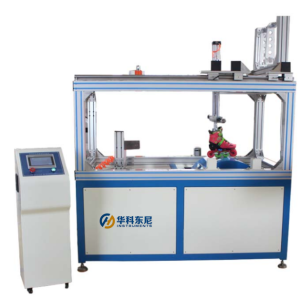 Leather&Shoes Testing Machine